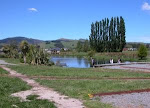
Halswell Domain

Halswell Domain
View from the Model Engineers' site in the Halswell Domain
Showing posts with label Happiness. Show all posts

Wednesday, April 1, 2020

Resources for everyone at home for an extended period

LIBRARY SERVICES YOU CAN ACCESS FROM HOME

Although the Halswell Library Te Hāpua is now closed for the next month at least,there are still many resources that you can access with your library card online.  AND you can also get a library card if you don't already have one!
You’ll need a library card and PIN number to access most of the eResources. No card? No problem, sign up online now.

If you need help, use the online chat service, LiveOnline, or call 03 941 7923. 

______________________

WORKING OUT WITH AN ONLINE CLASS

Christchurch City council sport and recreation have a number of online classes available to help you work out at home.  Scroll down this page to check out the different options and if you like these you might like to join in real time each day.


https://youtu.be/gHUVJKkjmSY   dance exercise
______________


LISTEN TO A PODCAST

Check out thousands of podcasts on every imaginable topic here
and listen to a few of them.


Here are some interesting sites sent in by Sylvia Lukey 

https://www.rnz.co.nz/programmes/eating-fried-chicken  


https://thespinoff.co.nz/podcasts/business-is-boring-callaghan/27-03-2020/how-nanogirl-built-a-lockdown-ready-online-learning-platform-in-three-days/
 

Te Papa Museum 

Christchurch Art Gallery

Guggenheim Art Gallery

Tate gallery London


New South Wales Art Gallery


Learn about our night sky from these websites:

https://www.space.com/skywatching

World wide telescope
 

Skillshare  and Creative Live both offer a range of options for trying new stuff and learning how to do new things some free and some paid.  ‎  
 

 An article from Consumer on self–isolation and how to survive using technology. Good tips!


______________

LEARN SOMETHING NEW

Sign up free with Duolingo  or other language learning platforms and try learning a new language

www.coursera.org Some of the world’s leading Universities and organisations offer nearly 4000 free courses on science, arts, engineering, health, languages and more (including these new ones on COVID-19). Taught by enthusiastic lecturers who like to teach, they go from beginner through to degree level. 
Hint – most courses are free, but even the courses with a fee can be taken for free by selecting the ‘audit’ option at the enroll page.

Free on line learning at MIT-  Massachusetts Institute of Technology
 

Harvard University – some interesting free courses.


From a Stanford University experiment

here are some links to music 

NZ musicians 

Documentary about Cellist YoY o Ma. A wonderful documentation of what music is all about. 

_______________

FIND MOVIES

Like movies?  Check out this website here and search for any movie to find out where you can get it and what it will cost.  

__________________

WATCH OR LISTEN TO A TED TALK

Thousands of topics and speakers to choose from here

__________________

Check out these craft projects  

________________ 

Sunday, March 29, 2020

Quick Tips for Dealing with Anger and Anxiety

Staying home can be surprisingly stressful, as are the changes that have happened in people's job statuses.  As a result of all that we may be feeling emotions like anger and anxiety a bit more often than normal.   

Anger and anxiety are close cousins. Both are difficult emotions, but there are ways to deal with them.  Here are some ideas for how to help yourself calm down and feel better.  

When you notice you are angry or anxious,  PAUSE and try focusing your attention in one or two of these ways.

  1. Slow your breathing down and to make your outbreaths up to two times longer than your in breaths.  Count 4-5 breathing in, count 8-10 breathing out.  Do this for about 10 breaths and take another ten if you need to!    
  2. Focus attention on breathing out and count from 1-10 every time you breath out.
  3. If you are standing, or if you can stand, then focus on the bottom of your feet and feel them on the ground.  Imagine your feet with roots going down into the earth.  It is also a really good thing to do in the supermarket queue if you need something to keep you entertained while you wait.  It has a surprisingly calming effect.
  4. See if you can broaden the scope of what you are looking at - so look more out of the corners of your eyes rather than just straight ahead.  See how wide a view you can see.
  5. When you notice you are getting anxious or angry, see if you can feel what is happening in your body - is your throat tight or  is your stomach clenched?   See if you can actively try to breath into those places and soften the tight muscles.   

You can practice doing these things when you find yourself with some spare time.  Practicing them when you don't need them makes them much easier and quicker to use when you do need them.  You've got nothing to lose by trying, so just give it a go.

For more information and links to mental health resources, check out this post

Friday, March 20, 2020

Looking after your Mental Health


In Christchurch, we have had quite a bit of practice at looking after our mental health in the years after the earthquakes struck.  We have got this! All the same principles apply here as they did around previous events.  We may just have to do them a little bit differently, depending on the situations that we find ourselves in. 

Perhaps the first thing to remember is that it is quite normal to be feeling worried or stressed about Covid 19 and the things that it is doing to our world.  


Connect: This may be more challenging if you are keeping away from physically meeting people you can still  connect over the phone or over the internet in whichever way suits you.  You can also visit people but just keep a good distance between yourself and the other people (1 to 2 metres) and if you can meet out of doors then that is even better.  A great option is to get out and walk with others (and then you keep active AND connect)!  
Here is a feel good article about some folks in Christchurch who are offering help.  The best way to do this is to band together locally (ideally in your street) so that you can contact each other for help if needed and that help is managed in small groups.   Swapping phone numbers and arranging to check on people near you at regular intervals is a good idea.


Get yourself a phone buddy or two, particularly if you live alone, so that you can keep an eye on each other. If you know people around you who live alone, perhaps offer to be their buddy.  Ring or text each other every day.  If someone in your group is sick then ring them twice a day.  Make a plan about what you will do if someone gets sick and needs help (work out who you will call, whether you can enlist help with deliveries for food, medicine etc.   GET STARTED ON THIS RIGHT NOW – it is a great practice, even if there is no pandemic.


Take notice:  Notice the beauty in the world around your home. Take time to feel the sun on your skin, breathe in fresh air whenever you can, make a list of what you’re grateful for, take the time to thank someone for how they make you feel, do a mindfulness exercise on YouTube, watch the plants in your home or outside your window.  Grow some microgreens.


Keep active  Go for a walk or run in a local park or round the local streets.  Say hello to those you see as you pass them (keeping a good space between you and them!).  See how many smiles you can give away each time.  Do a yoga class online (just stay 2m away from others!), use the cans in the pantry as weights, stretch.


Give !  Give smiles or waves, give encouragement to others who might be struggling, offer help to others.  Be kind.  Give compliments.  Give people a ring to keep in touch.  Share stuff, if you can.  Think of everything you do to limit the spread or Covid 19 as something you are giving to others.  There are many ways for you to get out there and GIVE without putting yourself at risk!

Focus on what you can control rather than on what you cannot.


Here are a few resources for helping you stay on top of things

Loads of Free mental health resources are available from this page on the NZ Governments Covid 19 Website.
 
Here are some Covid 19 related resources on depression.org.nz's website  

This looks like a pretty good and comprehensive resource that has been put together for people in Vancouver, Canada 
 
Rick and Forrest Hanson have a great series of podcasts on staying mentally well and they have made this one specifically about dealing with fear in the time of coronavirus

This is the Ministry of Health resource on looking after your mental health 

A CNN article on the topic of mental health  
Feel free to add any other resources that you have found in the comments.

A Guardian article on managing anxiety 

A blog post with some simple options for dealing with anxiety or anger in the moment


Thursday, February 27, 2020

World Sleep Day


Chrys Horn

I wonder how many people know about World Sleep Day.  It is celebrated on the third Friday of March each year (this year it is on the 20th) and it’s a good time to ponder the importance of sleep.  

We all know about it when our kids don’t get enough sleep, but good sleep is also really important for adults. 

Sleep researchers have found that good sleep protects us from obesity, diabetes, colds, heart disease, strokes and depression.  It also increases our concentration and productivity, and our athletic performance. 

As an example, studies have shown that sleep is surprisingly strongly related to obesity.  A lack of sleep increases the levels of ghrelin a hormone that causes hunger and decreases the level of leptin, a hormone that suppresses appetite.  As such, people who don’t sleep enough eat more.

A good night’s sleep increases immunity to the common cold.  In an experiment where people were given nasal drops containing cold viruses, researchers found that people who slept less than seven hours were almost three times more likely to develop a cold than those who slept eight hours or more.  

If you are not getting a good night’s sleep, then it is worth experimenting with ways to increase it.  


Some links to find out more:

5 tips to calm a restless mind going to sleep

The new science of sleep

Wiki How on how to sleep better 

The Sleep Foundation 
 

Friday, March 29, 2019

Gift Giving


Gift Giving


We all want to be generous but in a way that is good for all of us - our kids, our families, our communities and as well as our planet,  It is nice to give things that won't end up in landfill or that won't create more problems than we already have.  
The diagram below lists some ideas for gifts that can help us think about doing this.   
 Ideas for gifts could be tickets for events, meal vouchers at a local restaurant, or simply a promise (perhaps a home-made “voucher”) to take someone out for a fun activity or help them out in some way. someone once gave me a voucher that I could use to call on her for help in my garden.  It was great to get the help and wonderful to get it as a gift. 
 
If you still want to give people something more material, then there are numerous options from making and upcycling, to buying them something that is produced locally.  There are even local businesses out there that will upcycle for you if you don’t have the time or skills.

If you must buy something new, then get it from a small local business and buy something that won’t end up in the rubbish soon after Christmas. This helps keep money local, so it can be respent locally and is therefore better for others in our community.

More gifts are not necessarily better.  Maybe think about giving one good, long lasting item rather than many items that will just end up in the bottom of the toy box.    Some families with many cousins band together and organise themselves so that each child gets one good present from their cousins. 

If doing a secret squirrel, consider making something consumable – some fudge, or fruit balls or similar small treats that can be shared and enjoyed by the recipient of your gift, if they don’t want it themselves.  This avoids silly presents being put in the landfill as soon as they get home

Wrapping:  The way we wrap gifts can also result in a lot of rubbish.   The question is, are there other ways that you might wrap presents that result in less rubbish?   An option is to have reusable paper bags or even boxes that fold down flat but which you bring out for Christmas and birthdays each year.  If they are kept from year to year then these can be decorated by kids as their contribution to giving.   
 A second option might be to avoid wrapping a present at all and perhaps just decorate it in some way.  
 Reusing wrapping paper is something many people do.   On some occasions, even wrapping presents in newspaper can be all that is needed to provide the excitement of unwrapping a present without producing a lot of extra rubbish. 


Saturday, August 25, 2018

Minimalism and its benefits


Thanks to Deb Harding-Browne of No Boundaries Furniture for this article


Minimalism has become very popular and it has been influencing our lifestyle trends for some time. It can be seen in new housing developments that offer home decor in white, grey and black or soft natural monotones and in simplified landscaping with a lot of stones and pavings and textured plants, and in our city’s furniture stores. It is interesting to look at why our people are embracing this style.
People often believe minimalism comes directly from Buddhist and Feng Shui teachings, but actually, many other historical figures lived simply as a means to an end. Socrates was a minimalist as was Jesus Christ, John the Baptist, Paul the Apostle, St Francis of Assisi and all those who lived in monasteries and convents. More recently, famous minimalists include Henry David Thoreau, Gandhi, Albert Einstein, Mother Teresa, and Steve Jobs.
In modern times, the sixties hippies called for simplicity, however, this was followed by a blow out in greed in the eighties and nineties that has cost the next generation. It is our young that are developing a much stronger moral conscience about the planet in light of what has happened before them.
In marches the minimalist trend, as an antidote to consumerism and a wonderful way to take a stand against huge corporations. Hundreds of blogs have been started solely devoted to helping us to simplify our lives and the best of them have millions of readers. Usually, the blogs contain a central theme such as financial freedom, healthy habits, volunteering, tiny homes, travel, or home management. And while the philosophy has many forms, proponents more or less agree on the benefits as they are fairly logical cause and effect relationship.


LESS STUFF MEANS…
1. Less cleaning. Less stuff means less stuff to clean and organize and then cleaning itself is easier because you don’t have to lift things before you clean.

2. Fewer decisions. There are endless applications for this, but one example is if you reduce your wardrobe size, you will have means less outfits to choose from. This is an argument for uniform but many voluntarily simplify their wardrobes; Barack Obama wore the same blue or grey jacket every day while in office and Mark Zuckerberg wears a simple grey t-shirt.

3. Less waste. Again, this has applications in most areas of our lives. Let’s take cooking for example. Cooking simpler recipes alone means cutting back on the number of ingredients that need to be bought which means there is a smaller grocery bill and less packaging to be thrown out.
4. Less tidying. Some home managers with children will testify to the fact that they just seem to be putting things away all day which is a frustrating way to spend our lives. Less stuff means less tidying and more time for going to the park, the bush or the beach.
5. Fewer distractions. Less choices in what to do means we can focus on our priorities with less temptations. Minimalists advocate doing one thing at a time because constant considerations leads to restlessness and anxiousness.
6. More focus. Many simple life experts suggest picking three major goals instead of many. Others say no more than two projects at a time. Simplifying goals leads to efficiency and streamlines your life to achieve them more quickly.
7. More savings. American minimalists have often begun their journey because of financial problems where credit card debt got out of control and then they begin to figure out methods to help them get ahead. Once debt is cleared, the same methods are used to save money, which in turn buys freedom.
8. More room. There is the obvious physical component of having less frustration because there is less stuff in our environment to work around but also in a scheduling sense we have more room for leisure.

9. More charity. As we begin to declutter and discover what is a new level of ‘enough’ we begin to think about those around us who don’t have enough. Our hearts become softer and we are kinder and more disposed to helping those with less. Furthermore, as we are not focused on purely material goals as much we will begin to think about what we can do to help our society more.

10. More peace. With fewer distractions and a less cluttered schedule, we have the energy and efficiency to build a life that allows us more time for rest and solitude creating inner harmony, balance and peace. And as we consider those around us more, we have more peace as a result of a clearer conscience that comes from living a life of purpose.

As they say, minimalism is for the elite; for people who live in countries that have their material needs and greeds met. However, it is our greed that is making us sick and unhappy. 

Last year, a guest speaker from India came to speak in Christchurch. She was very grateful for the work a group of Christchurch families are doing in Kolkata, one of the poorest spots in the world. Looking out to the audience, she said “We don’t have much as you, but do you know what we have that you don’t? We have COMMUNITY.” While here, she was witnessing our walled in housing subdivisions and our elderly residential homes and impersonal shopping malls and sensed with a compassionate burden what we are lacking.