Halswell Domain

Halswell Domain
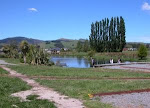
View from the Model Engineers' site in the Halswell Domain

Sunday, August 25, 2019

What do community boards do?


This article provides some information for voters in the upcoming local body elections about what Environment Canterbury does.
It is part of a series of four posts (linked below) that introduce the duties of the councils that we are voting for in this year's local body elections. 

What does the city council do?
What does Environment Canterbury do? and
What do District Health boards do? 


Community Boards are a part of Christchurch City Council 


In Christchurch, we have seven Community Boards, representing 16 Christchurch wards.  Each ward has two community board representatives and their City Councillor on their community board

They work with your community to help meet local needs, goals and aspirations and to communicate these to the Council.


Each Community Board has a three-year plan outlining its priorities and guiding its decisions.


The Community Boards' main roles are to:

  • Represent and act as an advocate for the interests of its community 
  • Consider and report on all matters referred to it by the Council, or any matter of interest to the board
  • Maintain an overview of services provided by the Council within the community
  • Prepare an annual submission to the Council for expenditure within the community
  • Communicate with community organisations and special interest groups within the community

What does the City Council do?


This article provides some information for voters in the upcoming local body elections about what Environment Canterbury does.
It is part of a series of four posts (linked below) that introduce the duties of the councils that we are voting for in this year's local body elections. 

What does Environment Canterbury do?
What do community boards do? and
What do District Health boards do? 


 The Christchurch City Council is a large organisation that is charged with looking after the wellbeing of the citizens of Christchurch.  

Three Waters: It provides safe drinking water, processes wastewater and  manages stormwater including looking after all the pipes for transporting these different waters.

Roads footpaths and transport facilities: It looks after most of the roads around the City, and many transport facilities from bus stops and bus stations to cyclepaths, footpaths and carparking.  

Social Wellbeing:  It writes development and management plans of many different types, contributes to social housing, contributes to economic development and supports community groups around the City.  It also runs events and activities and generally makes our city a good place to live in.

Waste Management:  The council deals with our waste and rubbish collection, 

Civil defence and hazard management it works to manage flooding and prevent damage to property, It had an important role in the Port Hills Fires and in the aftermath of the earthquakes. 

The elected council oversees this and works with staff to prioritise spending and services across the City. In Christchurch at present, There is a lot going on to rebuild the city so we have more than our fair share of maintaining and replacing buildings and negotiating with central government and the business community to progress the city’s recovery. 

As a result of all this, the Christchurch City Council has a significant impact on the lives of people living in Christchurch and electing people to set the council’s direction and authorise its spending is a serious job that we all have every three years. 

Councillors do a lot of reading and learning about these services, a lot of work to help people in their communities and spend a lot of time in meetings discussing the issues and making decisions, hopefully in the best interests of our city.  It is not an easy task and it takes peoples with patience and a capacity to understand what is going on both locally and at national level. 

What Does Environment Canterbury Do?

This article provides some information for voters in the upcoming local body elections about what Environment Canterbury does. 
It is part of a series of four posts (linked below) that introduce the duties of the councils that we are voting for in this year's local body elections.  

What does the city council do?
What do community boards do? and 
What do District Health boards do?
 

The Environment Canterbury Annual plan  outlines how the council will spends its money.  The budgeted work is divided into 6 work portfolios.

1) Freshwater Management

The Canterbury Regional Council looks after water quality and water quantity in our rivers, lakes and aquifers. They are guided in this by the Resource Management Act and by guidelines in National Policy Statements put together by central government. Doing this water work also needs the Council to work with Zone committees Ngāi Tahu, local councils, health boards, central government, and Canterbury communities.

2) Biodiversity & Biosecurity

Regional councils have a duty to protect and restore our native ecosystems and to help with managing both plant and animal pests. There are four main focus areas for this portfolio – regional biodiversity, braided rivers, wetlands and biosecurity

3) Hazards Risk and Resilience

This is all about civil defence and being ready for major events.  One of the most important parts of this in Christchurch has been developing stopbanks to protect the City from flooding from the Waimakariri. 

4) Transport and Urban development

This is Environment Canterbury’s largest budget item and most of it is spent on providing bus services in and around Greater Christchurch and Timaru. Public transport services also depend in part on Central Government policy and funding. These govern how bus services are procured and contracted out as well as what subsidy is available to users of bus services.
The Regional Council must also work with City and District Councils. The City council in Christchurch provides bus stops, bus lanes and facilities like the central city bus station and the Riccarton facilities. These things can make a big difference to how comfortable bus travel is.

5) Air Quality

The regional council looks after air pollution and they have made a significant difference to air quality in Christchurch particularly during the winter months. This work continues and through it they help people with insulating their homes and replacing wood burners with clean burners or heat pumps.

6) Regional Leadership

This portfolio is about building and maintaining relationships with other councils, with communities, with Ngai Tahu and government agencies and it helps to enable the work in the other portfolios. 

Thursday, July 25, 2019

Wetlands coming back to Christchurch

Once upon a time, most of Christchurch and, indeed,  most of the Canterbury Plains were wetlands – areas that provide a buffer between land and water. 
European Settlers drained nearly all of our wetlands. Unfortunately, now we are finding that we need some of them back!  Wetlands hold water back in a flood, can supply water to the surrounding area in a drought, help to filter pollutants out of water before it gets into waterways. 

People living in the lower reaches of the Otakaro/Avon and Opawaho/Heathcote have noticed that flooding is becoming more of an issue as areas upstream have been hardened and no longer soak up rain when it falls. Partly this is about our climate changing so that where we used to have more regular light rain, we are not getting more irregular heavy rain which overwhelms our river systems when it falls but leave them drying out in between. 
We have lots of new wetlands being developed in and around Halswell specifically to hold water back in a big rain so that people in the lower Opawaho/ Heathcote are flooded less than they otherwise would be.


The wetlands in the picture to the left are in Shirley near Horseshoe Lake.
The man made floating wetlands that you see in this picture will support plants that will take up nitrogen, phosphates and heavy metals, through their roots.  This will improve water quality in Horseshoe Lake and the Otakaro/ Avon River.


As well as being very important in a flat city like Christchurch, these wetlands are also good at sequestering carbon and the make wonderful places for walking.   Check one out near you soon

Thursday, July 4, 2019

Speed Limits and Travel Times


Speed limits around our city and our suburb are lowering in busy places or where safety is an issue (eg outside rest homes and schools).    
I have had quite a few conversations recently about how speed limits affect travel times.  Many people that I talk to think that if the speed limit drops from 60km/hr to 30 km per hour around town that travel times will double.   I must admit that if I’m in a hurry, it sometimes  feels like that is the case, but the reality is actually quite different.  Knowing this helps me to be more patient.
 
We often don’t travel at 50km/hr round town even when that is the speed limit, particularly in busy areas.    In rush hour, for example,  the sheer number of cars mean that we are not travelling very quickly and traffic speeds into the city are seldom much more than 30km/hour and often much less than 20km/hr (and we see this as people on bicycles go sailing past us).

This NZ Transport Agency report  shows that driving at a slower speed usually results in a relatively small increase in travel time, particularly when travelling around the city.   Factors, such as lights, traffic, and intersections have a much greater effect on our travel time.  No matter what, even out here in Halswell, we have to stop at traffic lights and intersections, slow down near schools and go slow for any road works.

Some figures from the NZTA report: 
·         Reducing the maximum speed from 100km/h to 80km/h on trip from Christchurch to Kaikoura (tested 42 times by different drivers) showed an overall increase in travel time of 12 minutes.
·         For trips round Wellington reducing the maximum speed 25% from 50km/h to 40km/h showed travel time increases ranged from 1-2 minutes over a 6-10 km trip.

These extra times seem a fairly small price to pay for fewer injuries and deaths from crashes.  In Christchurch, as in other centres, where 30km per hour limits have been used in busy areas, crash rates and injury rates have dropped significantly. 


Thursday, June 20, 2019

Surface Water and Why it is Important


Councils all over the world talk about the “three waters”.  These are: 
  1. Drinking and household water, 
  2. Waste water and 
  3. Surface water.

Drinking Water

Few of us stop to think how amazing it is that we can turn on the tap and good water comes out. 100s of kilometres of pipes and huge pumps are used to get water to your place, just when you want it from deep under the ground.

Waste Water 

This is water from things like our washing water, our toilets or used water from our sinks.  It also includes water that has been used by industry.  This water is is pumped through sewers and to the sewage treatment plant in Bromley.

Surface Water 

This  is all the water that flows off our streets, driveways, houses, and parks when it rains.  All surface water runs directly into our creeks and river systems. 

Christchurch is one of the flattest cities in the world and much of it used to be wetlands.  This means that drainage in the city has always been difficult, particularly when we have a lot of rain. Water quickly runs off the hard, paved surfaces that we have around the city rather than soaking into the ground slowly.  This increases flooding and affects the pollution of our rivers and streams.

Any pollutants on these surfaces run off when it rains and end up in the rivers and, eventually, in the sea.  Common pollutants are things like

  • plastic, which is dropped or falls out of people’s rubbish bins,
  • copper which comes from car brake pads or copper on houses,
  • zinc which comes from unpainted roofs and
  • oil, detergents or anything that might be on the roads or in driveways that is washed off when it rains.
  • dog poo and pee
  • Anything that people decide to wash down a drain

You can help keep our local rivers clean by:

  • asking for copper free brake pads when you have to replace the brake pads on your car, 
  • making sure your car is not leaking oil, and by washIng your car on your lawn or in a car wash (not on your driveway or on the road where all the detergent will run into the river).
  • keeping your roof painted, 
  • washing paint brushes in a sink in your house rather than near roadside drains, and 
  • picking up dog poo when you are out walking the dog 
  • planting densely along drains and river banks.  If you have a river in your garden you can do this yourself.  If not the help with planting days along stream banks.  Taller plants and even long grass can help to catch pollutants before they enter the waterways