Halswell Domain

Halswell Domain
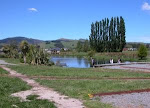
View from the Model Engineers' site in the Halswell Domain

Thursday, July 25, 2019

Wetlands coming back to Christchurch

Once upon a time, most of Christchurch and, indeed,  most of the Canterbury Plains were wetlands – areas that provide a buffer between land and water. 
European Settlers drained nearly all of our wetlands. Unfortunately, now we are finding that we need some of them back!  Wetlands hold water back in a flood, can supply water to the surrounding area in a drought, help to filter pollutants out of water before it gets into waterways. 

People living in the lower reaches of the Otakaro/Avon and Opawaho/Heathcote have noticed that flooding is becoming more of an issue as areas upstream have been hardened and no longer soak up rain when it falls. Partly this is about our climate changing so that where we used to have more regular light rain, we are not getting more irregular heavy rain which overwhelms our river systems when it falls but leave them drying out in between. 
We have lots of new wetlands being developed in and around Halswell specifically to hold water back in a big rain so that people in the lower Opawaho/ Heathcote are flooded less than they otherwise would be.


The wetlands in the picture to the left are in Shirley near Horseshoe Lake.
The man made floating wetlands that you see in this picture will support plants that will take up nitrogen, phosphates and heavy metals, through their roots.  This will improve water quality in Horseshoe Lake and the Otakaro/ Avon River.


As well as being very important in a flat city like Christchurch, these wetlands are also good at sequestering carbon and the make wonderful places for walking.   Check one out near you soon

Thursday, July 4, 2019

Speed Limits and Travel Times


Speed limits around our city and our suburb are lowering in busy places or where safety is an issue (eg outside rest homes and schools).    
I have had quite a few conversations recently about how speed limits affect travel times.  Many people that I talk to think that if the speed limit drops from 60km/hr to 30 km per hour around town that travel times will double.   I must admit that if I’m in a hurry, it sometimes  feels like that is the case, but the reality is actually quite different.  Knowing this helps me to be more patient.
 
We often don’t travel at 50km/hr round town even when that is the speed limit, particularly in busy areas.    In rush hour, for example,  the sheer number of cars mean that we are not travelling very quickly and traffic speeds into the city are seldom much more than 30km/hour and often much less than 20km/hr (and we see this as people on bicycles go sailing past us).

This NZ Transport Agency report  shows that driving at a slower speed usually results in a relatively small increase in travel time, particularly when travelling around the city.   Factors, such as lights, traffic, and intersections have a much greater effect on our travel time.  No matter what, even out here in Halswell, we have to stop at traffic lights and intersections, slow down near schools and go slow for any road works.

Some figures from the NZTA report: 
·         Reducing the maximum speed from 100km/h to 80km/h on trip from Christchurch to Kaikoura (tested 42 times by different drivers) showed an overall increase in travel time of 12 minutes.
·         For trips round Wellington reducing the maximum speed 25% from 50km/h to 40km/h showed travel time increases ranged from 1-2 minutes over a 6-10 km trip.

These extra times seem a fairly small price to pay for fewer injuries and deaths from crashes.  In Christchurch, as in other centres, where 30km per hour limits have been used in busy areas, crash rates and injury rates have dropped significantly. 


Thursday, June 20, 2019

Surface Water and Why it is Important


Councils all over the world talk about the “three waters”.  These are: 
  1. Drinking and household water, 
  2. Waste water and 
  3. Surface water.

Drinking Water

Few of us stop to think how amazing it is that we can turn on the tap and good water comes out. 100s of kilometres of pipes and huge pumps are used to get water to your place, just when you want it from deep under the ground.

Waste Water 

This is water from things like our washing water, our toilets or used water from our sinks.  It also includes water that has been used by industry.  This water is is pumped through sewers and to the sewage treatment plant in Bromley.

Surface Water 

This  is all the water that flows off our streets, driveways, houses, and parks when it rains.  All surface water runs directly into our creeks and river systems. 

Christchurch is one of the flattest cities in the world and much of it used to be wetlands.  This means that drainage in the city has always been difficult, particularly when we have a lot of rain. Water quickly runs off the hard, paved surfaces that we have around the city rather than soaking into the ground slowly.  This increases flooding and affects the pollution of our rivers and streams.

Any pollutants on these surfaces run off when it rains and end up in the rivers and, eventually, in the sea.  Common pollutants are things like

  • plastic, which is dropped or falls out of people’s rubbish bins,
  • copper which comes from car brake pads or copper on houses,
  • zinc which comes from unpainted roofs and
  • oil, detergents or anything that might be on the roads or in driveways that is washed off when it rains.
  • dog poo and pee
  • Anything that people decide to wash down a drain

You can help keep our local rivers clean by:

  • asking for copper free brake pads when you have to replace the brake pads on your car, 
  • making sure your car is not leaking oil, and by washIng your car on your lawn or in a car wash (not on your driveway or on the road where all the detergent will run into the river).
  • keeping your roof painted, 
  • washing paint brushes in a sink in your house rather than near roadside drains, and 
  • picking up dog poo when you are out walking the dog 
  • planting densely along drains and river banks.  If you have a river in your garden you can do this yourself.  If not the help with planting days along stream banks.  Taller plants and even long grass can help to catch pollutants before they enter the waterways

More Power Savers


In my last post, I provided some power saving tips – things that you can do for free to cut your power bills.  

In this postI’m going to look at things that have a cost but which generally pay back that cost by the power that you save.

 
Low energy lighting.

The no-extra-cost ideas from last month will save you more than enough to buy your first low-energy light bulbs.  LEDs are dropping quickly in price, they last a long time and a bulb of around 8 watts gives good light equivalent to a traditional 100 watt filament bulb, or a 25 watt fluorescent bulb.  Where possible avoid using the fluorescent light bulbs (the ones composed of small curly tubes).  They are quite fragile and contain mercury which makes them more hazardous to dispose of if you break them.  

LEDs can be bought pretty much wherever you buy lightbulbs.


Efficient Fridge Doors
Fridges and freezers can use a lot of power because they’re working 24hrs a day.  If choosing a new fridge, look for at least 3.5 stars on the energy efficiency label. Each extra star is an efficiency gain of about 10%.

Check the seals on upright fridge and freezer doors. They need to be tight enough to hold a piece of paper trapped in place when the door is closed.  If not put new seal on the doors.  Look for parts sources in Yellow Pages or ask at a retailer.

If you have an older fridge that runs  for long periods each day it may have a faulty thermostat –A recent survey found that about one in 5 older fridges did!  Unnecessary running could frost-damage food and run up excess bills. 
 

Stop whistling draughts.
Draughts can steal away up to 20% of the warm air from your home. Block up any open fireplaces with a chimney balloon or permanently with board or bricks and seal gaps in and around windows and  exterior doors. Hardware stores stock draught-stop strips, brushes and sealing caulks. You can make draught-stopper ‘sausages’ or ‘snakes’ to place at internal doors, from old scraps of fabric, stuffed with tights or cushion filling.
 

Cheap  DIY double-glazing  for windows.
Some of your windows might be suitable for using a plastic window insulation kit.  These are a clear plastic film, which you attach to the inside of the window frame using double-sided adhesive tape, and shrink the plastic to fit with a hair-dryer or fan heater.  You can find out more about the pros and cons of this at www.energywise.govt.nz

Tuesday, May 28, 2019

Free Power Savers

People have managed to save quite a lot on their power bills simply by learning about their own power use and thinking about how to use less.  Here are a few ideas to get you started.
  1. How hot is your hot water?
A survey of NZ homes found that about 1/3 of them had had dangerously hot water at the tap.  If it is, it can be a danger to children may risk being scalded and you will be using a lot of power to keep it that hot.
Hot water at the tap should not exceed 50°centigrade when running at its hottest.  Don’t make it too much lower than this – it also needs to be hot enough to control bacteria in the water.  Most electric or gas water heaters have a thermostat fitted to control how hot the tank gets.  The thermostat at the tank should not exceed 60°C, so that water from the hot taps flows at no more than 50°C.
    
     2. Only turn stuff on when you are using it
Turn off the TV, or lights when there is no-one in the room. Put the computer to sleep if you are going to be away from it for a few minutes.  Turn it off if you are going to leave it for more than an hour.  Turn these things off at the wall overnight or during the day if you are not home.

      3. Wash clothes in cold water
You know this!   Use cold water detergent and just do it. 
Running the machine only when you have a full load also saves power.
  1. Dry clothes outside in the Sun
As much as possible hang your clothes outside in the sunshine.   An added benefit even in the winter is that UV light in sunshine helps to kill bacteria on your clothes.  Better still, put a clothesline under a carport, pergola or other covered area for when it rains.
It IS better to use a well vented dryer for a few minutes than to dry clothing on racks indoors when it’s raining.  Drying clothing indoors releases heaps of moisture into your house making it damp and cold.
  1.  Once dusk falls, close the curtains.
Keep room heat in. Glass still loses heat, but more slowly when insulated from the room’s warm air by lined curtains under a pelmet or by close-fitting fabric blinds. Venetian blinds are not effective insulation as they allow too much air movement.
If your curtains are thin or non-existent, check out the curtain bank at Community Energy Action
Phone 374 7222 or visit www.cea.co.nz