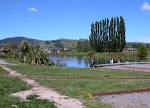
Halswell Domain

Halswell Domain
View from the Model Engineers' site in the Halswell Domain

Tuesday, February 4, 2020

100 DAYS OF SUMMER


 by Chrys Horn
100 Days of Summer is a little brochure that provides 100 great ideas for families interested in exploring Christchurch outdoors. 

Miria Goodwin and her twin sister Anneke Beardsley put the booklet together to help people enjoy the physical and mental health benefits of being outdoors.  Getting outdoors is great for children’s brain development, for social connection and for fostering a connection to nature. 

They aim to encourage people of all stripes to do more outside this summer and enjoy all the many beautiful places Canterbury has to offer.  The guide is also easy to read and carry, and provides a daily pointer that suits all ages.


Among the many suggestions are hugging a tītoki tree, looking for dolphins off Godley Head, searching for street art in the city, checking out the Sparks Road Wetlands or visiting the Prebbleton Nature Reserve, or watching model yachts at Halswell Domain.

You can pick up a copy of 100 Days of Summer at any Christchurch City Library or Council Service Centre.

If you are looking for things to do, you might also check out this post for some local ideas.

I wonder if we could come up with  50 free things you can do to explore Halswell?   All ideas gratefully received below in the comments!


Seaweek – Kaupapa Moana


Chrys Horn

Seaweek –Kaupapa Moana is New Zealand’s annual national week
celebrating the sea. This year it takes place from Saturday 29 February to Sunday 8 March 2020.

Halswell seems a long way from the sea but even what we do in Halswell can have significant impact on the sea. All of the water that runs off our land including our roads and pathways, ends up in the sea and on the way, it affects what is in our local rivers and streams. It is via water that any rubbish that is lying around ends up in the sea as well. If it is plastic, it contributes to the huge amount of plastic that is already killing many sea animals.


Here are some easy ways to help look after the sea from our corner of the world:

1) Clean your car on your lawn where the soil and grass can help filter and break down the dirt and detergent before it gets into the waterways. Don’t clean it on your driveway or on the road, since everything that washes off these ends up in our rivers and in the sea. If you can’t clean it on the lawn, take your to a car wash where the waste water is treated through the sewer system.


2) Pick up any rubbish you see along the roads. If you are someone that walks or runs, take a bag with you to collect rubbish on your way. A big thank you to all who make the effort to keep our place looking great by doing this already.


3) Spend a minute picking up any rubbish that you see outside your house on collection day before you take your bin in. One of the biggest sources of roadside rubbish is from rubbish collection day when plastic etc. blows out when bins are emptied. 

4) Learn about our oceans - There are some good documentaries about the seas on Netflix.  Spend an evening watching one of them.  

There are lot of activities (many of them free or very inexpensive) on offer for Seaweek 2020 - from A detective walk through a wetland, cleaning up the Estuary and a bike ride along the coastal pathway between Ferrymead and Sumner.  There is also an ephemeral art competition, a puppet making workshop and even a quiz night.  Find out more about all of these here


Monday, December 30, 2019

Back to School Savings

By Adele Geradts
This article offers some ideas for cutting down the costs associated with getting everyone back to school.  It also offers some options fir finding assistance with those costs if you are looking for ways to meet those costs.

Buy uniforms second hand
There are so many ways to get your hands on second-hand uniforms, and it can save you a small fortune. Posting on Facebook and other social media sites such as Neighbourly will often turn up some cheap or even free uniform. Trade Me is also a good option for sourcing second-hand uniform. Some schools offer second-hand uniform sales. Shoe stores often have back to school deals as soon as the children have gone back to school
 

Cut your stationery costs
The chances are that you have pens, pencils, books and more leftover from previous years. Get the kids to go on a stationary hunt and then mark off what you already have. Even if you don't want to shop around, flick through the fliers and get your stationery shop of choice to match its competitors' prices. Finally, if the school won't give you a list and asks for a fixed sum of money, wait until your friends have their boxes, look at what you need and buy just that. If you really can't afford items for class sets such as colour pencils, don't buy them until you can pay for them.
 

Delay that BYOD purchase
BYOD children need to bring their own devices to school. There are some excellent arguments in favour of the educational value of a tablet. Last year's model will do, or a cheaper brand might be ok. If you delay buying until February, you'll find some good sales. Do carefully check the technical requirements with the school though – you don't want to risk purchasing a device that's incompatible with the software the kids will need to use.
 

Spread the cost
Ask your school if you can buy as you go. Often schools keep a stock of stationery at the same cheap prices that retailers sell the stuff for in January. Or only buy the absolute minimum number of uniform items at the beginning of the year and stock up as the seasons change. Retailers need to clear their stock because they know they won't sell much until next January.
Some schools will quietly cover the cost for you if you go to them and ask.

If you're struggling, go to Work and Income for a school assistance payment early. WINZ may be able to help with school uniforms and stationery if you're on a low income or a benefit. They may be able to help with the costs of some school fees and activities if there is an immediate and essential need for them. For example, 

  • school camps
  • trip costs
  • school fees.
Some schools may ask that students have computing equipment, e.g., iPad, laptop or tablet. If you can't afford to buy these, WINZ may be able to help, but you need to talk to the school first to see what options are available to purchase via the school first.
If you're not on a benefit, you may be able to get a Recoverable Assistance Payment.
https://www.workandincome.govt.nz/products/a-z-benefits/recoverable-assistance-payment-grant.html
If you're on a benefit, you may be able to get an Advance Payment of Benefit.
https://www.workandincome.govt.nz/products/a-z-benefits/advance-payment-of-benefit.html

These loans are recoverable and do need to be paid back, but at least they're interest-free.
You can find more information here https://www.workandincome.govt.nz/eligibility/children/school-costs.html

Summer wanderings around Halswell

By Chrys Horn

Halswell is blessed by a great range of walks and some great green spaces where you can walk, bike or just hang out, catch up with friend or read a book.
This article highlights a few that might help you get out this summer  (and beyond).


Check out this little known gem in Sabys Rd.  It was the subject of a blog post in 2015 but still there, still the same and it is easy to get to by bike. 

You might also like to look at this Blog post to check out some other options that have already been discussed on this Blog

We have two newly developed wetland areas that are well worth a wander or a bikeride:  
One in Quaifes Road near to where Murphys Road meets it.  There are some lovely plantings in there and some good springs that feed into Knights Stream and eventually into the Hurutini/ Halswell River. This area connects nicely with the green space and water storage area near Longhurst which connects further to greenspace in Longhurst itself.  This means you can walk a good long way in pleasant surroundings and have a coffee in Longhurst to finish it off.  

The second is on the Corner of Hendersons and Sparks Roads.  It is easy to get to using the bike path from Te Hapua which takes you up the side of Sparks Road. 

Of course many will already know about the tracks around the Quarry and the lakes in that area.  It is a popular asset for Halswell and offers great walking, picnicking and coffee. 

If you are looking for something a little more challenging, walking up Kennedys Bush track to the Summit road and on to Kennedys Bush itself,  is a great thing to do and can fill up a good part of the day.  If you choose to take lunch, and there are great views from the top and you can wander all the way along the Summit Road.  
Tracks to the right take you to Ahuriri Bush, while tracks to the left can take you as far as Lyttelton or even Godley Heads, if you want a good day's walk and can organise transport back (buses are a good option from Lyttelton). For fit people or people on bikes who are going a bit faster it is quite possible to walk to Lyttelton and back in a longish day.  Biking also is a great thing to do via Kennedys Bush Track and you can go for miles once you are at the top.  The article above also makes some observations and suggestions re this route. 

There are some wonderful walks around Aidanfield and you can walk quite a way down the greenspace of the upper Heathcote starting in Wigram coming under the motorway into Aidanfield and following along the river.  Across Aidanfield Drive a track takes you along the river next to the School and onto the tracks in Canterbury Park and through to Curletts Road.  

Happy walking and biking!


Silver Birch Trees and Pollen


 by Adele Geradts
Recently I was asked about the removal of the silver birch (Betula pendula) trees on Rempstone Drive in Halswell. In 2017, residents of Rempstone Drive asked the Community Board for the Silver Birch trees in their street to be removed. The Silver Birch trees are not only a nuisance but also affecting people’s health. You can see the submissions here

Unfortunately, in 2017 there was no budget for the removal and replanting of healthy trees, so if removal were approved by the Community Board, this work would need to be programmed. Residents who presented at the Community Board meeting indicated support to help fund the replacement of these trees. However, the residents were not unanimous. The decision was made in 2017 not to remove them, and the residents still have to deal with the trees getting bigger and creating more pollen as they grow.

The Silver Birch produces pollen abundantly and is the leading tree pollen causing allergic symptoms in New Zealand. Allergic symptoms, include hay fever, asthma and some food allergies. It is a very potent allergen. 

 Silver Birches are planted all over Christchurch and New Zealand. The primary tree pollen allergen season in New Zealand starts in August and runs through October.  A significant amount of pollen in the air occurs between 6.00 am and noon. 

Pollen can blow long distances on windy days, but most pollen stays close to its source.  For some hayfever sufferers who are allergic to trees, grass and weed pollens, allergy season can last from August to March. The highest pollen counts occur on calm, hot, sunny days from October through to December.

Avoiding pollen is difficult in Christchurch, but the following tips from the allergy clinic may help:


  • Get advice from your Chemist or family doctor about medications and treatments that will relieve your symptoms. Most medications work best if taken before the symptoms get bad.
  • Make use of pollen counts found on the Metservice website. https://www.metservice.com/towns-cities/locations/christchurch
  •  Stay indoors until after midday (if possible) limiting your exposure.  Minimise going out on windy days.
  • Wear sunglasses, ideally with side shields, to protect your eyes from the sun and pollen.
  • Avoid mowing grass even when the grass is not in flower. Stay inside when the grass is being mown. I you have to mow grass, it helps to wear a mask and eyewear.
  • Keep windows closed both at home and when in your car. A car with air conditioning will reduce the pollen load considerably. Consider fitting a filter over the air intake or install a car ionizer or air filter.
  • Do not picnic in parks or the country during the high pollen season.
  • If you are sensitive to particular weeds or trees that are outside your bedroom window, have them removed when possible. 
  • Always have your allergies confirmed, so you know what's causing the problem.
  • Shower (making sure you wash the pollen grains from your hair regularly); Bathe your eyes frequently and carry a supply of tissues.


For more information check out: