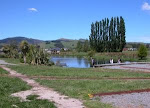
Halswell Domain

Halswell Domain
View from the Model Engineers' site in the Halswell Domain

Friday, October 25, 2019

HARAKEKE (FLAX) CARE AND USES


By Giarne Harrison
In Halswell, we are blessed with a lot of harakeke that is Council planted and maintained as well as lots in our own gardens. Harakeke is like any plant; in that it can become overgrown if not attended to properly. It can also be challenging when planted right by pathways or where it spreads into or falls over mowing areas.

Harakeke is a really useful plant - the leaves can be used for weaving; and the korari (stems) can be used to make tī rakau - for playing stick games. The council has a great website that gives some info: https://my.christchurchcitylibraries.com/harakeke/ 
If you'd like to keep the bushes near you in tidy condition here are a few tips.
  • always say a karakia (a short one is given in this article)
  • never cut the middle three leaves, they keep the bush alive
  • start cutting close to the middle leaves and cut as straight down to the ground as possible (this helps rain flow off the cut area)
  • treat the plant and leaves with respect as they represent our tipuna/ancestors
  • always wash your hands after handling (harakeke can have a laxative impact)
  • do not cut at night, in the rain, or whilst menstruating
  • proper cutting prevents pooling rain, mould and diseases setting in and allows air and sun to circulate
In the article there is a pic showing a well cut back plant (photo taken by Giarne Harrison of some Halswell harakeke) and a graphic from the Council website showing the parts of the plant (sourced from the link provided above). 
All parts of the harakeke plant need to be disposed as general, red waste as the fibre content means it doesn't break down well as compost. It can be cut into pieces and used as a mulch and weed suppressant. We used to put waste back under the plants but that can sometimes spread disease so that's not common anymore.
If you'd like some help cutting back your plant, I'm happy to help if I have time. You can contact me by email - giarne@gmail.com  I'm a local weaver and always happy to help when I can. If you have concerns about the harakeke on council land you can snap, send, solve or call the Council to let them know an area needs a tidy up - 941 8999.

******

Local Elections 2019: who got in to represent the Halswell and West Christchurch Wards


Congratulations to our new and returning local body representatives. 
 
Christchurch City Council

Anne Galloway returns for a second term as our council representative.  Anne is a resident of Aidanfield and has a particular interest in youth and has been good at connecting with a wide range of people in her role over the last three years.

Halswell Hornby Riccarton Community Board

Debbie Mora  has been returned as a representative for Halswell on the Halswell Hornby Riccarton community board.   
AndreiMoore,  is a new face on that board for this term.  Andrei grew up in Halswell and has been active in this community including on the committee of the Halswell Community Project.  We’re excited to see a young face on the board.  
Sadly, we are saying goodbye Ross McFarlane who has been a fantastic representative for Halswell on that board for the last three years.

Canterbury Regional Council
Our new Environment Canterbury representatives who look after the West Ward for Christchurch are: 
Craig Pauling: Craig is a local Halswell Resident who has been active in all sorts of different ways in our local community as well as serving on the Selwyn Zone Committee and being chair of Te Ara Kakariki.  

Megan Hands resides in Darfield and has been a member of the Malvern Community Board and was on the Selwyn Zone Committee.  We’re interested in why she wanted to represent us here in the West Ward of the City, rather than represent her community in Mid Canterbury.  Hopefully, time will tell, and we’ll see and how she plans to do that.

Canterbury District Health Board
Congratulations also to local resident Naomi Marshall on getting elected onto the District Health Board.  Other people elected onto the DHB were Sally Buck, Jo Kane, James Gough, Catherine Chu, Aaron Keown and Andrew Dickerson.

Sunday, August 25, 2019

What does the District Health Board do?


This article provides some information for voters in the upcoming local body elections about what Environment Canterbury does. 
It is part of a series of four posts (linked below) that introduce the duties of the councils that we are voting for in this year's local body elections.  

What does the city council do?
What do community boards do? and 
What does Environment Canterbury do?


There are 20 district health boards across New Zealand and they are there to set the overall strategic direction of health services in their area and to monitor performance. They are required to plan and deliver health services regionally, as well as in their own individual areas.

Their objectives include:

  •  Improving, promoting and protecting the health of people and communities
  •  Promoting the integration of health services, especially primary (eg doctors) and secondary care (eg hospitals) services
  • Seeking to arrange the most effective and efficient delivery of health services to meet local, regional, and national needs
  •  Promoting effective care or support of those in need of personal health services or disability support.
  • Helping people with disabilities to be independent, included and to participate in society
  • Reducing health differences by improving health outcomes for Māori and other population groups
  • Aiming to eliminate differences in health outcomes between various population groups.
  • DHBs must show a sense of social responsibility, foster community participation in health improvement, and uphold the ethical and quality standards commonly expected of providers of services and public sector organisations.


Public hospitals are owned and funded by DHBs.

What do community boards do?


This article provides some information for voters in the upcoming local body elections about what Environment Canterbury does.
It is part of a series of four posts (linked below) that introduce the duties of the councils that we are voting for in this year's local body elections. 

What does the city council do?
What does Environment Canterbury do? and
What do District Health boards do? 


Community Boards are a part of Christchurch City Council 


In Christchurch, we have seven Community Boards, representing 16 Christchurch wards.  Each ward has two community board representatives and their City Councillor on their community board

They work with your community to help meet local needs, goals and aspirations and to communicate these to the Council.


Each Community Board has a three-year plan outlining its priorities and guiding its decisions.


The Community Boards' main roles are to:

  • Represent and act as an advocate for the interests of its community 
  • Consider and report on all matters referred to it by the Council, or any matter of interest to the board
  • Maintain an overview of services provided by the Council within the community
  • Prepare an annual submission to the Council for expenditure within the community
  • Communicate with community organisations and special interest groups within the community

What does the City Council do?


This article provides some information for voters in the upcoming local body elections about what Environment Canterbury does.
It is part of a series of four posts (linked below) that introduce the duties of the councils that we are voting for in this year's local body elections. 

What does Environment Canterbury do?
What do community boards do? and
What do District Health boards do? 


 The Christchurch City Council is a large organisation that is charged with looking after the wellbeing of the citizens of Christchurch.  

Three Waters: It provides safe drinking water, processes wastewater and  manages stormwater including looking after all the pipes for transporting these different waters.

Roads footpaths and transport facilities: It looks after most of the roads around the City, and many transport facilities from bus stops and bus stations to cyclepaths, footpaths and carparking.  

Social Wellbeing:  It writes development and management plans of many different types, contributes to social housing, contributes to economic development and supports community groups around the City.  It also runs events and activities and generally makes our city a good place to live in.

Waste Management:  The council deals with our waste and rubbish collection, 

Civil defence and hazard management it works to manage flooding and prevent damage to property, It had an important role in the Port Hills Fires and in the aftermath of the earthquakes. 

The elected council oversees this and works with staff to prioritise spending and services across the City. In Christchurch at present, There is a lot going on to rebuild the city so we have more than our fair share of maintaining and replacing buildings and negotiating with central government and the business community to progress the city’s recovery. 

As a result of all this, the Christchurch City Council has a significant impact on the lives of people living in Christchurch and electing people to set the council’s direction and authorise its spending is a serious job that we all have every three years. 

Councillors do a lot of reading and learning about these services, a lot of work to help people in their communities and spend a lot of time in meetings discussing the issues and making decisions, hopefully in the best interests of our city.  It is not an easy task and it takes peoples with patience and a capacity to understand what is going on both locally and at national level.