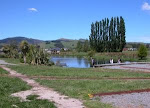
Halswell Domain

Halswell Domain
View from the Model Engineers' site in the Halswell Domain

Tuesday, May 28, 2019

Free Power Savers

People have managed to save quite a lot on their power bills simply by learning about their own power use and thinking about how to use less.  Here are a few ideas to get you started.
  1. How hot is your hot water?
A survey of NZ homes found that about 1/3 of them had had dangerously hot water at the tap.  If it is, it can be a danger to children may risk being scalded and you will be using a lot of power to keep it that hot.
Hot water at the tap should not exceed 50°centigrade when running at its hottest.  Don’t make it too much lower than this – it also needs to be hot enough to control bacteria in the water.  Most electric or gas water heaters have a thermostat fitted to control how hot the tank gets.  The thermostat at the tank should not exceed 60°C, so that water from the hot taps flows at no more than 50°C.
    
     2. Only turn stuff on when you are using it
Turn off the TV, or lights when there is no-one in the room. Put the computer to sleep if you are going to be away from it for a few minutes.  Turn it off if you are going to leave it for more than an hour.  Turn these things off at the wall overnight or during the day if you are not home.

      3. Wash clothes in cold water
You know this!   Use cold water detergent and just do it. 
Running the machine only when you have a full load also saves power.
  1. Dry clothes outside in the Sun
As much as possible hang your clothes outside in the sunshine.   An added benefit even in the winter is that UV light in sunshine helps to kill bacteria on your clothes.  Better still, put a clothesline under a carport, pergola or other covered area for when it rains.
It IS better to use a well vented dryer for a few minutes than to dry clothing on racks indoors when it’s raining.  Drying clothing indoors releases heaps of moisture into your house making it damp and cold.
  1.  Once dusk falls, close the curtains.
Keep room heat in. Glass still loses heat, but more slowly when insulated from the room’s warm air by lined curtains under a pelmet or by close-fitting fabric blinds. Venetian blinds are not effective insulation as they allow too much air movement.
If your curtains are thin or non-existent, check out the curtain bank at Community Energy Action
Phone 374 7222 or visit www.cea.co.nz


What is Local government?


Local body elections are coming up this year in October. Every three years, we get to vote in the people who oversee the Christchurch City Council and the local Community Board, Environment Canterbury and the District Health Board. 
Local Government is given its responsibilities in the Local Government Act 2002.  These are to enable democratic local decision-making and action by, and on behalf of, communities; and
to meet the current and future needs of communities for
  • good-quality local infrastructure, ie water supply, drainage, sewerage and roads,
  • local public services (things like libraries, community activities), and
  • to regulate things like subdivisions or housing development, building activities, businesses etc.
Many of these activities are also directed by central government through legislation such as the Resource Management Act, the Reserves Act


Council activities
Regional councils, like Environment Canterbury, are primarily concerned with environmental resource management, flood control, air and water quality, pest control, and, in specific cases, public transport, regional parks and bulk water supply.

Territorial authorities, like our City Council, are responsible for a wide range of local services including roads, water reticulation, sewerage and refuse collection, libraries, parks, recreation services, local regulations, community and economic development, and town planning.

In Christchurch, we elect a council and a community board.  Community boards, as their name implies, have a more local focus whilst City Councillors keep an eye on issues across the whole city.  For most local issues, the place to start contacting the Council is through the community board.  Community boards allocate some funding and make decisions on some kinds of local facilities.  They also make recommendations to Council on decisions being taken by them.

District Health Board
These elections also allow us to vote for people to sit on our District Health Board which allocates health funding.   Health Boards can also impact on you because they have some influence as to the priorities of health funding in Canterbury.

You can have a say in how your community is run by voting in the local government elections.  Voting is by post.  Papers will be sent out to voters in late September or early October and have to be into the returning officer by 12th October.  To find out more visit the Local Government NZ website


Who will you be voting for?
1)      One person to represent you on the Christchurch City Council.    
Christchurch is divided in to 14 wards and a City Councillor represents one ward. 

2)      Two people to represent you on a community board. 
There are 6 community boards around the City.   Each is made up of either two or three wards.  Each ward has two community board members to represent them in addition to the Councillor for that ward.

3)      Two people to represent you on the Regional Council.
The Canterbury Regional Council is to have a full democratic election for the first time in 9 years.  From 2008 to 2016, Environment Canterbury has been run by a council appointed by the government.  In 2016 about half of the council was elected democratically.  In 2019 the Council will return to normal and be fully democratically elected.
Canterbury has been divided into 7 wards – 4 in Christchurch City: Central, South, West and North East.  And three other wards cover the rural areas to the north and south of the City.  You can download maps of where these are from this page.
 
4)      Seven of 11 people on the District Health Board.
Four of the people on the DHB are appointed.  We vote for the other seven. 


Who can stand for election to Local Government?
All New Zealand Citizens can stand for election to any council or community board.  Nominations close in July.  Find out more at www.lgnz.co.nz

How do you find out about local government candidates?

With a little bit of effort, you can find out quite a bit about your local candidates.  The easiest way to find information online (try googling them, for example). Here are a few more places where you can find out more.
  • Keep an eye out for information about them in local media, or on Billboards or in your letterbox.
  • The local news media will run stories about candidates and their campaigns during the elections. 
  • Community newsletters and Facebook groups can also be a way to find out about candidates.  Here in Halswell, we will invite candidates to put information up on this community blog and we will link to those profiles on Facebook and through this newsletter.
  • Many candidates have social media profiles and blogs or websites which can help you learn about them and their values.  
  • Residents associations and other community groups often run public meetings where candidates can present their views and answer questions from electors.
  • Most candidates will provide a ‘candidate profile statement’ of 150 words to the electoral officer with their nomination, and this profile will be included in the information sent to voters.  This information might also be on the local council’s website after Mid August when nominations have closed.
  • Another way to learn about people is to ask a few people who you know and trust what they know and who they will vote for and why.  This does not mean you should vote the same way they do (although you might want to). Asking the question and hearing the answer can help you think about your own views.
  • Look out for candidates at local events and activities and ask them questions.   
  • As it gets closer to the elections, many organisations also send questions to candidates and publicise their answers.  Look out of these - they an help.

Monday, April 29, 2019

Familiar Face: Zahra Hussaini

Local Resident, Zahra Hussaini is the youngest member of a refugee family originally from Afghanistan.  She spent 12 years in Iran before coming to NZ almost 15 years ago.

She speaks of a feeling I’ve heard many immigrants express, that she does not quite belong anywhere fully.  As a New Zealander she is aware that she is seen as different, but when she goes back to Iran she is also aware that she is now seen as different there because her life here in New Zealand has changed her. The positive side of that, she says is that she is very adaptable and has a good understanding of culture. She is finding her way through understanding what it means to be a young Muslim New Zealander along with others of her age who live here.

Her religion and parents have taught her the importance of helping people around them and giving back to their communities. Possibly as a result of that, Zahra is very  active in the refugee and migrant community here. 

She spends time with young people to encourage them to get involved in building positive change in the community. She volunteers for Who is Hussain? an organisation which aims to provide for those in need through empowering individuals, particularly youth, to give back to the wider community in Christchurch. Alongside this, she has been studying science at Ara and is now completing a Degree in Science at Canterbury University.

The recent attacks on the Muslim community have made her even busier as she uses her considerable skill and care to help.  She comments “I’ve found that being involved in the community has a strong impact in creating a sense of belonging to where you live.”

While I’m talking with her I’m impressed by the size of Zahra’s heart and her sadness at what has happened here. Like many of us, I am deeply moved by the forgiveness that Zahra and her community here have shown and the enormous gratitude she expresses for how so many New Zealanders have helped out since.  

Zahra says “I was so moved at Friday prayers in the park after the attack. It felt amazing to be surrounded by thousands of people, many who were wearing headscarves, because they wanted to show solidarity and keep us all safe.”  She says she felt the same at the memorial service the Friday after that.

Zahra is now working with others to find ways to thank Christchurch people and to reciprocate the love and assistance that has been shown to the Islamic Community here. She is keen to break down the barriers between communities and to make sure that the horror of the attacks has some long term positive outcomes.  She embraces diversity and tells me that it is one of the most beautiful things we have in New Zealand.

Let’s keep that and make it grow stronger in our community here in Halswell.

Friday, March 29, 2019

Keeping your Home Dry without Breaking the Bank


A dry home is a warm and healthy home.  Keep your home dry in the winter months by:
 

  1. Drying your laundry outside as much as possible.  If you have a dryer, use it only when you have to and make sure it is ventilated to the outside of your house.  Make sure you clean out the lint filters after each use so your dryer stays as efficient as possible. 
  2. When using the bathroom, turn on the fan (if you have one). Open the windows a little while you are using the bathroom and open them wide once you have finished.  Keep the bathroom door closed as soon as you turn the water on.  This ensures that the steam does not get into the rest of the house and that it is directed outside.  Keep your showers short to minimise steam and save on hot water.   
  3. In the kitchen, keep the lids on saucepans and the kettle and turn down the heat when cooking.
  4.  Wipe any condensation that you have on your windows off each morning.
  5.  Ventilate your house on fine, winter days by opening up all the doors and windows at the warmest time of day for about 20 minutes.  If you are not home in the middle of the day then try to do it for a few minutes before you leave in the morning.
  6.  If you have mold anywhere, use white vinegar and apply it generously to the area that has the mold with a spray bottle or a cloth.  Leave it for one hour to do its work, then gently scrub the mold off with warm water and wipe off excess water
  7. Avoid unflued gas heaters - which release toxic fumes and make your house damp. Cheap portable electric heaters are safer and cost less to run.

If you can spend some money and or time and you live in an older home, here are some other things that you can do to improve the health of your home:

  1. Put down a black plastic sheet under the house as a barrier to water vapour coming out of the soil.
  2. Ensure all the vents under you house are clear.
  3. Fix any leaky pipes or leaky guttering.
  4. If your windows are single glazed then you could consider double glazing them, or if the expense is too great then try this DIY method using window insulation film (see more about doing this here).
  5. If your floor or ceiling are not insulated then consider insulating them.


Gift Giving


Gift Giving


We all want to be generous but in a way that is good for all of us - our kids, our families, our communities and as well as our planet,  It is nice to give things that won't end up in landfill or that won't create more problems than we already have.  
The diagram below lists some ideas for gifts that can help us think about doing this.   
 Ideas for gifts could be tickets for events, meal vouchers at a local restaurant, or simply a promise (perhaps a home-made “voucher”) to take someone out for a fun activity or help them out in some way. someone once gave me a voucher that I could use to call on her for help in my garden.  It was great to get the help and wonderful to get it as a gift. 
 
If you still want to give people something more material, then there are numerous options from making and upcycling, to buying them something that is produced locally.  There are even local businesses out there that will upcycle for you if you don’t have the time or skills.

If you must buy something new, then get it from a small local business and buy something that won’t end up in the rubbish soon after Christmas. This helps keep money local, so it can be respent locally and is therefore better for others in our community.

More gifts are not necessarily better.  Maybe think about giving one good, long lasting item rather than many items that will just end up in the bottom of the toy box.    Some families with many cousins band together and organise themselves so that each child gets one good present from their cousins. 

If doing a secret squirrel, consider making something consumable – some fudge, or fruit balls or similar small treats that can be shared and enjoyed by the recipient of your gift, if they don’t want it themselves.  This avoids silly presents being put in the landfill as soon as they get home

Wrapping:  The way we wrap gifts can also result in a lot of rubbish.   The question is, are there other ways that you might wrap presents that result in less rubbish?   An option is to have reusable paper bags or even boxes that fold down flat but which you bring out for Christmas and birthdays each year.  If they are kept from year to year then these can be decorated by kids as their contribution to giving.   
 A second option might be to avoid wrapping a present at all and perhaps just decorate it in some way.  
 Reusing wrapping paper is something many people do.   On some occasions, even wrapping presents in newspaper can be all that is needed to provide the excitement of unwrapping a present without producing a lot of extra rubbish.