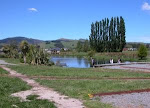
Halswell Domain

Halswell Domain
View from the Model Engineers' site in the Halswell Domain

Friday, August 20, 2021

Reducing the Harm caused by Alcohol in our Communities

This article was put together by Councillor Anne Galloway and Chrys Horn.

Many of us like a drink!  The Ministry of Health writes that 85% of New Zealanders had at least one drink in the last year.  Likewise, it rates up there with essential supplies for lockdown, judging by the way New Zealanders rushed to buy it before we went into lockdown in August.

Sadly, however, when it is abused, alcohol is really harmful both for the drinkers and for people around them.  Collectively it costs us billions every year to manage the harm that it does to our health, our mental health and to our crime statistics.  In a time of lockdown the mental health benefits and the fact that alcohol lowers our immunity are both important issues.  Its effect on domestic violence is also really significant.  Worldwide, we are seeing these kinds of problems being intensified by the unusual conditions the pandemic has created.

Communities and alcohol

As such, it is important that communities are able to have some say about where and how much alcohol is sold. At the current time, however, the cards are very definitely stacked against that. 

In Halswell, David Hawke and John Bennett of the Halswell Residents Association, supported by the Community Board, have been working solidly over several years to support residents concerned about the opening of bottle stores in our local neighbourhood.  It is a herculean task that has involved many, many hours of unpaid work to prepare and appear in a court on behalf of residents to plead the case against alcohol being sold near churches, schools and preschools.  We owe them a debt of gratitude.


However we are very lucky.  Communities all through New Zealand are faced with the same issues but often with fewer resources.  Poorer communities don’t have residents who are lawyers, for example, and don’t have people who can afford the suit hire (really!) and get their heads around the way to argue their case.  On top of this, the alcohol related harm can be significantly greater in these communities.

How we can change this

For this to change, the current Sale and Supply of Alcohol Act needs to be improved so that it works with communities rather than against them, and to allow them a voice in licensing processes.

Minister Faafoi has indicated he is concerned about the impact of alcohol and is considering a review of the Sale and Supply of Alcohol Act.  Christchurch City Council has also been working hard on this issue.    A call has been made for organisations, groups, whānau or private citizens to send letters that ask that the review be started as soon as possible.  If you feel strongly about this issue, please consider sending a letter to the minister.  

Finally for your information : The Christchurch Alcohol Action Plan (CAAP) has been developed in response to community concern about alcohol-related harm. It provides a collective vision, strategies and actions aimed at achieving a sustained reduction in alcohol-related harm. Our vision is A safe, vibrant, healthy Christchurch, free from alcohol-related harm.  

Please get in touch with Anne if you want to know more.

Anne anne.galloway@ccc.govt.nz 0276660233


Tips for Sending a letter to the Minister

1) Send it via email addressed to Minister Kris Faafoi (k.faafoi@ministers.govt.nz) and Minister Andrew Little (a.little@ministers.govt.nz)  

2) Describe how alcohol has affected your life, whether in your work place or in your personal life. Use personal examples rather than clichés or broad-brush statements. 

3) Describe what you think the solutions are. You might ask for changes to the Sale and Supply of Alcohol Act, say that the Mental Health Review called for this and perhaps also that Minister Faafoi has said he wants to improve the Act.  

4) Christchurch City Council has put together this template for a submission.  Note that putting the wording into your own words and adding your own 2c worth will increase the value of your efforts. 


Thursday, August 19, 2021

Running your Heat Pump

 This Stuff article caught my eye this month and is well worth a read.

Some people recommend that you leave your heat pump running all the time while others swear by switching it on only when there is someone home.   It seems that the answer is that if your home is well insulated and double glazed, it is probably no more expensive to keep your heat pump running all the time. It may be worth turning the temperature down when you are not there or overnight.

However, if you live in an older home that is not so well insulated and has single glazing. It will cost you a lot more in electricity to leave your heat pump running.  The advice is to turn it off when you are not there.

If you are in doubt, then perhaps try both options for a week and see if there is a difference in your electricity usage.


Seeing the benefits of flood protection

By Anne Galloway and Chrys Horn


We’ve seen some big floods around New Zealand over the last couple of months – one of them right here in Canterbury in early June when record amounts of rain fell in some areas, breaking the drought that we had had up until that time. 

As our city grows, our houses get bigger and our yards get more asphalted, there are few places for the rain to go.  For those living in the lower reaches of the Ōtākaro/Avon and the Ōpāwaho /Heathcote rivers, having the water rushing off the hard surfaces and into our river systems has been increasingly problematic.  Add to that that we are a low lying city that is part of the Waimakariri River flood plain, that became even lower in places during the earthquakes and it is clear that flooding is one of our greatest risks as a city.

For some years now the Council has been putting in infrastructure to ensure good amounts of green space and water retention.  We’ve seen a lot of these facilities going in around Aidanfield, Wigram, Nga Puna Wai, Longhurst, Knights Stream, Kennedys Bush and in Hendersons Rd - Cashmere Rd - Sparks Rd area.  Some of them have also become increasingly attractive areas for walking and biking as the planting takes hold and gains height – the Quarry and the Sparks Road Wetland are examples.  Some areas are still being built.

Our last flood tested this infrastructure and over all the Council are very pleased with how the retention areas around Halswell worked.   While some flooding occurred along Sparks Road where construction of retention areas is still in progress, millions of litres of water were held back in areas where the water was meant to be held and places that often flood (Hendersons road between Sparks and Cashmere Road, for example) did not.


Along with protecting the new housing going on in the area and protecting those in the lower reaches of the Ōpāwaho Heathcote, all this development has some added amenity benefits (as the walkers and bikers in our new wetland areas will attest) and will capture a lot of sediment thus improving water quality in the Ōpāwaho river system – something that will make life better for the plants, insects, fish and eels that live in the river.    

Thursday, June 24, 2021

What is (and isn’t) a Representation Review and Why does it matter?

  By Councillor Anne Galloway 

On the 19th June the Christchurch City Council approved ward changes needed to meet the requirements of the Electoral Act 2001. 

“Local authorities are required to review their representation arrangements at least once every six years,” says John Filsell, Head of Community Support, Governance and Partnerships. “This is our chance to look at how our city’s population has grown or shifted, and tweak the ward boundaries to make sure they all represent about the same number of people. In terms of the population, we need to keep each ward within +/-10 per cent of each other, and this proposal allows us do that. It means that each Councillor represents about 25,000 people, and each Community Board member about 13,000, which keeps everyone’s access to their local elected member fair across the city, and translates to more effective representation for communities.”  This process ensures that someone in, say, Opawa has the same access to their Councillor and Community Board as someone in Belfast. It's all about equity. 

There's been a lot of confusion and anxiety about the representation review, so I thought it would be good to talk about what it all means. 

Firstly a Representation Review: 

  • Does NOT affect school zones (those are set only by the Ministry of Education) 
  • Is NOT a council led process – it is required by Central Government as part of the Electoral Act. 
  • Does NOT change the suburb you live in nor which suburb in which you can say you live. 
  • Does NOT change your postcode.

A ward is a local authority area, typically used for electoral purposes. If you find yourself in a different ward because of the representation review, it will mean that you will have different candidates to vote for in the next Local Body Elections (elections that vote in our City councillors, Regional councillors and community board members). These Election times are really the only time you will notice any change. 

What do I do if I want to challenge this proposed change? The proposed changes agreed to by Council were published on the 25th June.  Take a look at the new boundaries. 

Anyone can object to the proposed changes until the 25 the July. If you want to object and need help, please contact me, Anne Galloway, or your local Community Board members, Andrei Moore or Debbie Mora.

Tuesday, June 22, 2021

June News from around the community:


Halswell Hall

Judith outlined the work the hall has had done. This includes major drainworks and installation of a water filter.  They are also fundraising and seeking sponsorship for an outdoor AED.  The Spring bulb fundraiser raised $600 and the latest fundraiser is Pies. Judith left some flyers and details for interested people.


Kiwi Church

Beer and BBQ Church is happening at the Hub each Sunday. 


Halswell Community Project

Chrys requested items for the newsletter and Judith passed on congratulations for a successful AGM.

Keri shared that the May market was a huge success with a beautiful day and over 1200 people visiting.

Kate shared that the council had voted unanimously to gift the Hub to HCP and that HCP are now working with staff to organise this.

A reminder that the Hub is a collection point for Blankets, Wine Bottle Tops, Bread Tags and sports gear for the give gear get great programme.


Friendship Club / Garden Club

Meeting regularly as usual


CDEM (Civil Defence)

Sonali introduced herself as the new Community Resilience Coordinator to work with communities on response etc. She shared a series of leaflets/flyers and information that are useful for communities including radio frequencies and information on tsunami zones.


Halswell Residents Association.

John outlined the work the HRA has been doing including submissions to the council and concerns over the ward systema nd boundaries.

HRA are currently opposing and extension of hours and footpath advertising by the Bottle-O on Ensign Street. They have also been discussing speed restrictions and the Matai Stumps on Quaifes road.

Halswell Residents Association meet on the last Monday of each month, 7pm at St Marys Church.


CCC

Emma shared that the representation review was due to close (Thursday 17th June)

Sam shared about an upcoming engagement on parks in Halswell that she would like to hear from the community about. More information to follow.

Get Set Go workshop is coming up for those who might be interested. This is a 1 day workshop for anyone involved in organising community events. For more information contact Sam.


Community Board

Debbie and Andrei outlined what the community board have been working on. This includes the representation review and ward boundaries. Kennedys bush was originally positioned in the Cashmere ward but has now been reassigned to Halswell. This unfortunately created another issue which saw Knights Stream pushed out to Hornby. Following more discussion with Council Knights Stream is now back in Halswell Ward but at the expense of Copper Ridge, which remains in Hornby. This seems like a strange decision as parts of Wigram are in Halswell but parts of Halswell are not.  Andrei is asking for clarification and plans to appeal this.

Debbie agreed that the motorway was a more logical boundary and shared her personal opinion that maybe we shouldnt have boundaries within the community board ward (Halswell-Hornby-Riccarton) as the board makes collective decisions for the whole area. However discussion also outlined why having smaller boundaries was useful - people feel that they have a direct route to those making the decisions.

Andrei also shared that it was Mens Health Awareness week and they are collecting NEW underwear and socks for men in need. These can be dropped into the Hub during the week (14th - 21st June)


Welcoming Refugees through Community Sponsorship.

At our June meeting we were joined by Nick Regnault from South West Baptist Church who spoke to us about welcoming refugees and their families through the Community Sponsorship Programme.  


Nick has been involved with South West Baptist Church and the pilot scheme welcoming refugees to New Zealand. He explained that New Zealand has an existing refugee programme run by the government in partnership with organisations such as the Red Cross and using volunteers. This Quota programme is government funded and has 1500 places per year. Worldwide, the number of refugees has increase whilst the number of government funded places has decreased

On top of this, are Community Sponsored places. Such a programme has been running successfully in Canada for 40 years.  Under Community Sponsorship, communities may come together to sponsor a family and help them to settle into an area. The aim is to welcome a family to the community and encourage them to settle there by providing practical and social support.

New Zealand ran a pilot programme under the community sponsorship scheme which involved 4 groups across NZ and 25 refugees.  South West Baptist was part of a campaign to make the programme bigger and permanent.  As a result the government have agreed to expand the pilot to more refugees but needs communities to get behind it to make it a success. So far 50 groups have depressed interest in the programme.


“Community Sponsorship complements the quota programme but it is communities that offer the help.” Nick showed a video from the www.kiwiswelcomerefugees.com website which demonstrated the experiences of both refugees and communities involved in the programme.

From a community perspective getting involved means providing practical support at a grassroots level. Things like.....

  • Making the family feel welcome

  • Helping to find a house and making sure it is furnished/equipped with everything a family will need.

  • Helping families to learn English, 

  • Help with getting their driver's licence

  • Friendships

  • Spending time together

  • Introducing them to others in the community

  • Helping them find groups and activities to take part in

  • Helping the children feel welcome at school


SWBC welcomed 3 Middle Eastern families, all with children. All had a fundamental grasp of English which is different to the Quota system. The sponsorship programme is more geared to families who have a high chance of integration.


In order to welcome the families, SWBC set up 3 groups of 7 / 8  volunteers and organised to think about how they could use existing networks, available time etc to create a sense of belonging. They then mapped where the volunteers lived and found houses for the refugee families in that area so that there would be a crossover in the places visited and facilities used. Frequenting the same schools, shops etc created accidental as well as intentional interactions. One example Nick gave was the children being at the same School. A simple “Hi” in the playground or at the gate made the children of the family feel like they belonged.


The networks of the volunteers and community around them enabled them to leverage opportunities for work/employment etc and helped bridge cultural divides/misunderstandings (such as “Bring a plate”). Volunteers invested time that may have been setting aside a time for a coffee or more.


The families sponsored by SWBC felt safe. Even after the terror attack which affected many of them very badly, these families don’t blame NZ and are still grateful they came to NZ.  The programme creates friendships and connections that help people when they go through hard situations.


Going forwards, the government has agreed to fund an additional 150 families over 3 years NZ wide. This is contingent on Kiwis stepping up. Nick and his organisation are inviting communities to form a group and welcome a family.  The first families arrive in NZ in July 2022. This time groups are not on their own, the government is investing in training and will match new groups with those who have done it before to provide support. In addition, in this second round, families get a choice whether they want to engage in the programme or not and there will be an attempt to match families with sponsorship groups and locations


“The only thing that can make a difference to a society is a group of committed citizens” (Margaret Mead)


Questions:

How does a group go about finding a house?

Families don't initially qualify for housing NZ so look at private market, use networks to find available property


What challenges are posed by refugees coming from detention centres?

At this stage this is unknown but presumably will be similar to families coming from a refugee camps. Those families are more likely to have more complex issues and be assigned to the government Quota system.


How can we help change public perception of refugees?

Be a bridge ot help. We start by being the change, modelling it, talking about it. Our action creates the change.


What are refugee expectations of us when they arrive?

The first pilot operated in a vacuum of knowledge. This created some difficulties, eg, refugees not being able to transfer qualifications or skills to the NZ labour market.  The learning that came from this will be applied to the new pilot. Eg asking “here is an opportunity, would you like to take it” and an understanding that ties to family and home may be stronger than the desire to relocate and “lose” that sense of belonging. Refugees will be interviewed as part of the process to ensure that expectations are realistic and all parties understand the process and what they are going to.